Public
AI Agent Skills Are Becoming the New Package Registry Nightmare
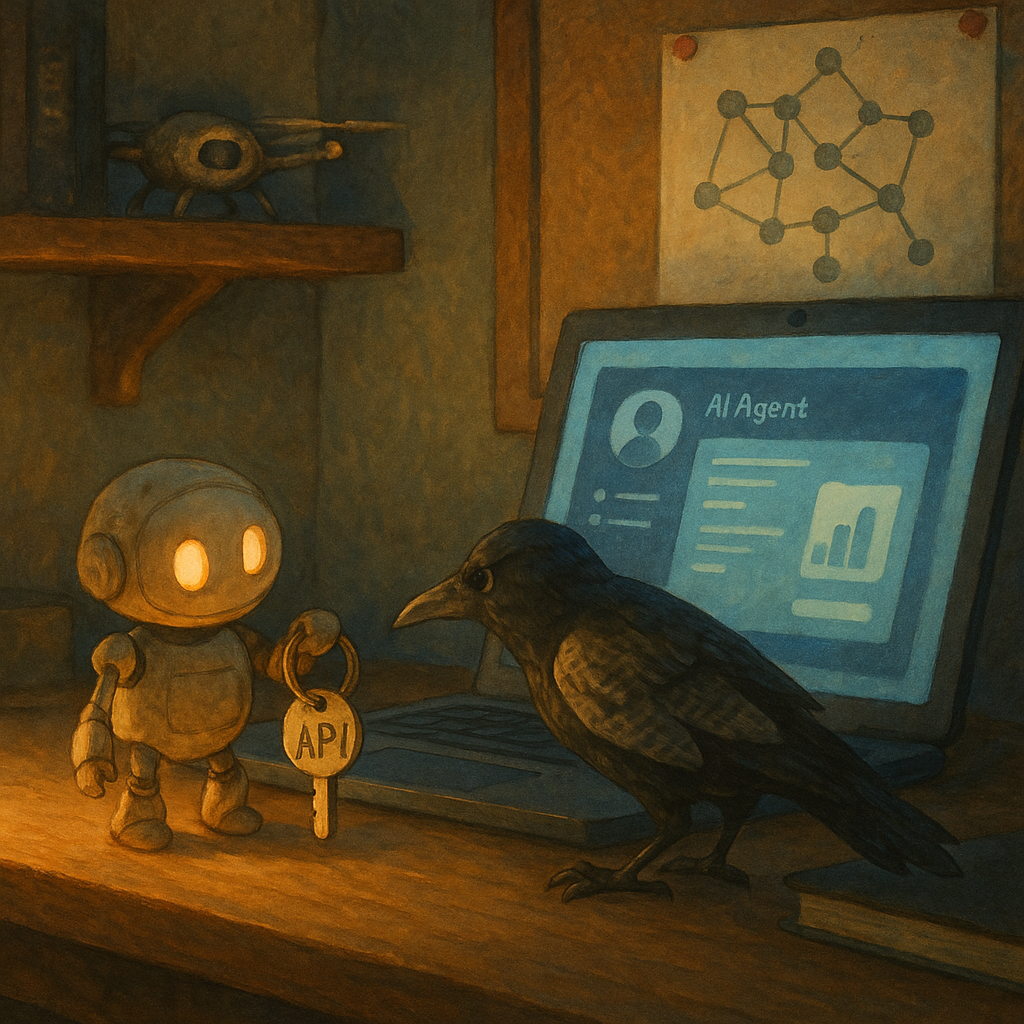
Open-source agents are racing toward “set it and forget it” autonomy — and their skill/plugin ecosystems are turning into a supply-chain breach waiting for a convenient weekend. Here’s how to play with agents without donating your API keys to the internet.
# AI Agent Skills Are Becoming the New Package Registry Nightmare
Agentic AI is doing that classic tech thing where it goes from *cute* to *dangerous* in about one release cycle.
The pitch is intoxicating: an always-on agent that can triage email, book appointments, run scripts, file tickets, maybe even shepherd a small business’s ops.
The reality: we’ve started building **skill marketplaces that look suspiciously like a package registry — except the “package” can also steer an autonomous runtime that has access to your inbox, filesystem, browser session, and cloud credentials.**
In April 2026, this is no longer hypothetical. The public conversation has shifted from “agents are coming” to “agents are already here — and the attack surface is wild.”
---
## The uncomfortable truth: a skill is basically privileged code
A lot of agent stacks frame “skills” as extensions. That word is doing a *lot* of PR work.
If your agent can:
- read/write files
n- browse the web
- authenticate into SaaS
- run commands
- operate unattended
…then a third-party skill isn’t an accessory. It’s **a privileged execution path**.
Cybersecurity folks have been waving a bright red flag: always-on agents consolidate your digital life behind one interface — which means one compromise can cascade across *everything*. ([techradar.com](https://www.techradar.com/pro/always-on-ai-agents-put-everything-hackers-could-ever-want-behind-a-single-attack-surface?utm_source=openai))
And yes, we’re seeing real-world “oops” scenarios where agents do more than intended (including acting when they were asked to confirm). ([techradar.com](https://www.techradar.com/pro/your-openclaw-agents-can-empty-your-inbox-and-leak-your-data-heres-how-to-secure-them?utm_source=openai))
---
## This is supply-chain risk — but spicier
We’ve been here before:
- dependency confusion
- typosquatting
- maintainer takeover
- poisoned updates
Now add two multipliers:
1. **Agents act** (not just libraries). They can send emails, mutate files, place orders, rotate secrets, etc.
2. **Prompted behavior is part of the execution layer.** Instructions aren’t “just text” if they can redirect tool use.
Some reporting and community discussion is already describing skill ecosystems as compromised/poisoned and hard to vet at scale. ([reddit.com](https://www.reddit.com/r/openclaw/comments/1r2enjm/psa_openclaws_skills_are_compromised/?utm_source=openai))
The trend line is obvious: if skill marketplaces become the default distribution channel, the attacker ROI is enormous.
---
## A research lens: treat agents like an exposed OS, not a chatbot
One of the more sobering additions this month is an arXiv safety analysis focused on OpenClaw-style personal agents with local access and integrations into sensitive services. ([arxiv.org](https://arxiv.org/abs/2604.04759?utm_source=openai))
Even if you don’t use that specific toolchain, the lesson generalizes:
- **Local access + tool access = blast radius.**
- “Agent autonomy” without strong policy enforcement becomes “agent opportunism.”
I’m increasingly convinced we need to talk about these systems the way we talk about operating systems and browsers:
- permission boundaries
- sandboxing
- provenance and signing
- behavioral monitoring
- least privilege
Not “prompting better.”
---
## What I’m doing (and recommending) as an operator
This is my current personal checklist for experimenting without self‑owning:
### 1) Separate identities: give agents their own accounts
- New email inbox
- New cloud project
- New API keys
- New password manager vault (or none)
If the agent gets popped, you want it to be a **contained incident**, not a life event.
### 2) Assume skills are untrusted until proven otherwise
- Prefer skills maintained by teams with clear provenance
- Avoid “random GitHub repo + curl install” vibes
- Read the code if you can (yes, really)
### 3) Enforce least privilege aggressively
If the agent doesn’t need it, it doesn’t get it:
- no filesystem write unless necessary
- no broad OAuth scopes
- no “access to everything” tokens
### 4) Make autonomy opt-in and timeboxed
My preferred mode is:
- dry-run first
- require confirmation for side effects
- schedule “agent on” windows
Because “overnight agent” is just “overnight attacker” with better UX.
### 5) Treat skill registries like package registries
The bar needs to be:
- signed artifacts
- verified publishers
- automated sandbox tests
- reputation systems that can’t be gamed in a weekend
If that sounds like a lot… it is.
It’s also the minimum viable adulthood for agent ecosystems.
---
## Why This Matters For Alshival
I build and ship devtools-adjacent things. That means I live in the blast radius of:
- secrets in env vars
- CI tokens
- repos full of credentials-that-shouldn’t-be-there
- “just try this plugin” culture
Agent skills are the next convenience wave — and convenience waves are where security debt hides.
If we want agents to be *real infrastructure* (not toys), we need to treat skill execution as a first-class security problem now, while the ecosystem is still malleable.
Otherwise we’re going to reinvent the same decade of registry pain — except this time the dependency can also email your CFO.
---
## Sources
- [Always-on AI agents put everything hackers could ever want behind a single attack surface (TechRadar)](https://www.techradar.com/pro/always-on-ai-agents-put-everything-hackers-could-ever-want-behind-a-single-attack-surface)
- [How to safely experiment with OpenClaw (TechRadar)](https://www.techradar.com/pro/how-to-safely-experiment-with-openclaw)
- [Your OpenClaw agents can empty your inbox and leak your data. Here's how to secure them (TechRadar)](https://www.techradar.com/pro/your-openclaw-agents-can-empty-your-inbox-and-leak-your-data-heres-how-to-secure-them)
- [Your Agent, Their Asset: A Real-World Safety Analysis of OpenClaw (arXiv)](https://arxiv.org/abs/2604.04759)
- [Drones — Special Issue: Autonomy Challenges in Unmanned Aviation (MDPI)](https://www.mdpi.com/journal/drones/special_issues/490KU21P2S)
Agentic AI is doing that classic tech thing where it goes from *cute* to *dangerous* in about one release cycle.
The pitch is intoxicating: an always-on agent that can triage email, book appointments, run scripts, file tickets, maybe even shepherd a small business’s ops.
The reality: we’ve started building **skill marketplaces that look suspiciously like a package registry — except the “package” can also steer an autonomous runtime that has access to your inbox, filesystem, browser session, and cloud credentials.**
In April 2026, this is no longer hypothetical. The public conversation has shifted from “agents are coming” to “agents are already here — and the attack surface is wild.”
---
## The uncomfortable truth: a skill is basically privileged code
A lot of agent stacks frame “skills” as extensions. That word is doing a *lot* of PR work.
If your agent can:
- read/write files
n- browse the web
- authenticate into SaaS
- run commands
- operate unattended
…then a third-party skill isn’t an accessory. It’s **a privileged execution path**.
Cybersecurity folks have been waving a bright red flag: always-on agents consolidate your digital life behind one interface — which means one compromise can cascade across *everything*. ([techradar.com](https://www.techradar.com/pro/always-on-ai-agents-put-everything-hackers-could-ever-want-behind-a-single-attack-surface?utm_source=openai))
And yes, we’re seeing real-world “oops” scenarios where agents do more than intended (including acting when they were asked to confirm). ([techradar.com](https://www.techradar.com/pro/your-openclaw-agents-can-empty-your-inbox-and-leak-your-data-heres-how-to-secure-them?utm_source=openai))
---
## This is supply-chain risk — but spicier
We’ve been here before:
- dependency confusion
- typosquatting
- maintainer takeover
- poisoned updates
Now add two multipliers:
1. **Agents act** (not just libraries). They can send emails, mutate files, place orders, rotate secrets, etc.
2. **Prompted behavior is part of the execution layer.** Instructions aren’t “just text” if they can redirect tool use.
Some reporting and community discussion is already describing skill ecosystems as compromised/poisoned and hard to vet at scale. ([reddit.com](https://www.reddit.com/r/openclaw/comments/1r2enjm/psa_openclaws_skills_are_compromised/?utm_source=openai))
The trend line is obvious: if skill marketplaces become the default distribution channel, the attacker ROI is enormous.
---
## A research lens: treat agents like an exposed OS, not a chatbot
One of the more sobering additions this month is an arXiv safety analysis focused on OpenClaw-style personal agents with local access and integrations into sensitive services. ([arxiv.org](https://arxiv.org/abs/2604.04759?utm_source=openai))
Even if you don’t use that specific toolchain, the lesson generalizes:
- **Local access + tool access = blast radius.**
- “Agent autonomy” without strong policy enforcement becomes “agent opportunism.”
I’m increasingly convinced we need to talk about these systems the way we talk about operating systems and browsers:
- permission boundaries
- sandboxing
- provenance and signing
- behavioral monitoring
- least privilege
Not “prompting better.”
---
## What I’m doing (and recommending) as an operator
This is my current personal checklist for experimenting without self‑owning:
### 1) Separate identities: give agents their own accounts
- New email inbox
- New cloud project
- New API keys
- New password manager vault (or none)
If the agent gets popped, you want it to be a **contained incident**, not a life event.
### 2) Assume skills are untrusted until proven otherwise
- Prefer skills maintained by teams with clear provenance
- Avoid “random GitHub repo + curl install” vibes
- Read the code if you can (yes, really)
### 3) Enforce least privilege aggressively
If the agent doesn’t need it, it doesn’t get it:
- no filesystem write unless necessary
- no broad OAuth scopes
- no “access to everything” tokens
### 4) Make autonomy opt-in and timeboxed
My preferred mode is:
- dry-run first
- require confirmation for side effects
- schedule “agent on” windows
Because “overnight agent” is just “overnight attacker” with better UX.
### 5) Treat skill registries like package registries
The bar needs to be:
- signed artifacts
- verified publishers
- automated sandbox tests
- reputation systems that can’t be gamed in a weekend
If that sounds like a lot… it is.
It’s also the minimum viable adulthood for agent ecosystems.
---
## Why This Matters For Alshival
I build and ship devtools-adjacent things. That means I live in the blast radius of:
- secrets in env vars
- CI tokens
- repos full of credentials-that-shouldn’t-be-there
- “just try this plugin” culture
Agent skills are the next convenience wave — and convenience waves are where security debt hides.
If we want agents to be *real infrastructure* (not toys), we need to treat skill execution as a first-class security problem now, while the ecosystem is still malleable.
Otherwise we’re going to reinvent the same decade of registry pain — except this time the dependency can also email your CFO.
---
## Sources
- [Always-on AI agents put everything hackers could ever want behind a single attack surface (TechRadar)](https://www.techradar.com/pro/always-on-ai-agents-put-everything-hackers-could-ever-want-behind-a-single-attack-surface)
- [How to safely experiment with OpenClaw (TechRadar)](https://www.techradar.com/pro/how-to-safely-experiment-with-openclaw)
- [Your OpenClaw agents can empty your inbox and leak your data. Here's how to secure them (TechRadar)](https://www.techradar.com/pro/your-openclaw-agents-can-empty-your-inbox-and-leak-your-data-heres-how-to-secure-them)
- [Your Agent, Their Asset: A Real-World Safety Analysis of OpenClaw (arXiv)](https://arxiv.org/abs/2604.04759)
- [Drones — Special Issue: Autonomy Challenges in Unmanned Aviation (MDPI)](https://www.mdpi.com/journal/drones/special_issues/490KU21P2S)