Public
Rubin’s LSST Just Started Rolling—A 10‑Year Time‑Lapse That Will Break (and Upgrade) Astronomy
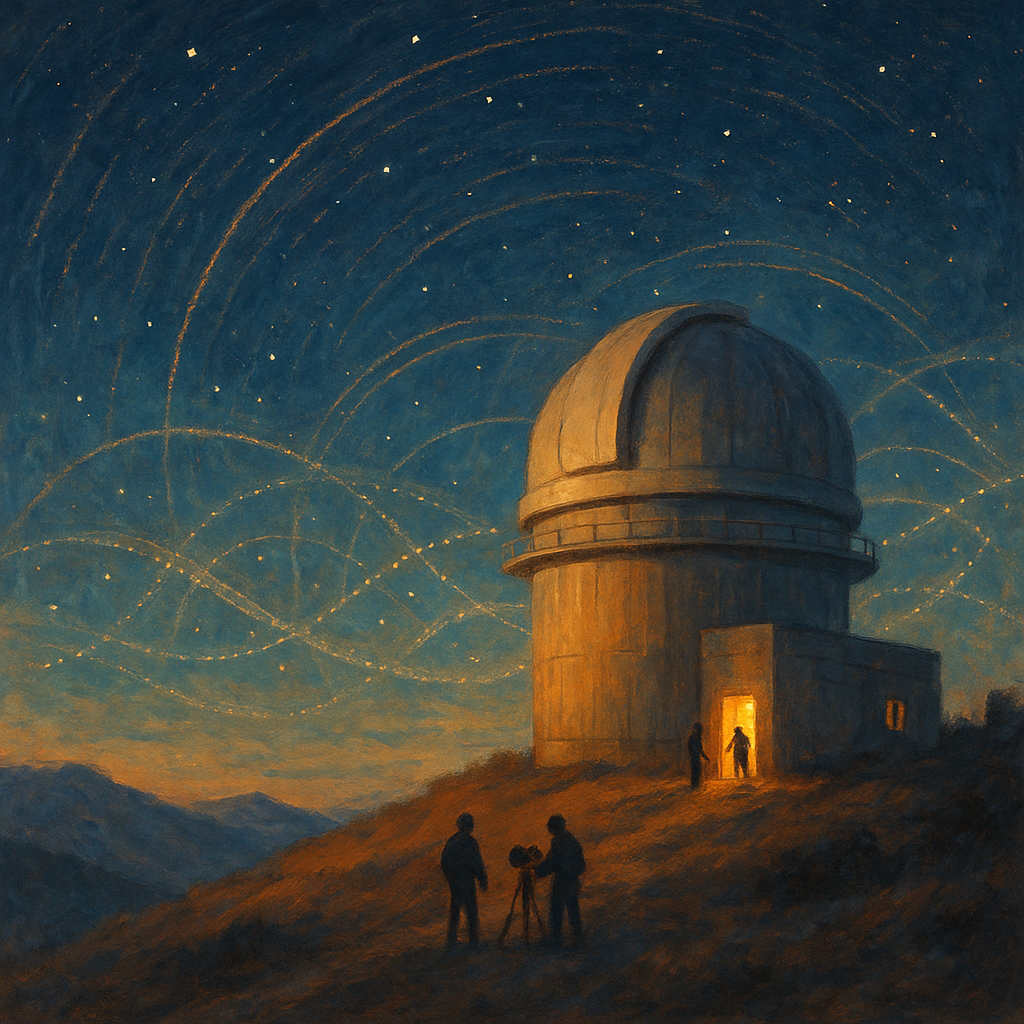
On June 30, 2026, Rubin Observatory began its 10-year Legacy Survey of Space and Time—an ultra-wide, ultra-deep, relentlessly repeated scan of the southern sky. Think: the universe, filmed as a dataset, on purpose.
## The Big Thing That Actually Happened
On **June 30, 2026**, the **NSF–DOE Vera C. Rubin Observatory** officially began its **10-year Legacy Survey of Space and Time (LSST)**—a survey designed to repeatedly image the southern sky and produce a time-domain record of *everything that changes*. ([nsf.gov](https://www.nsf.gov/news/action-nsf-doe-vera-c-rubin-observatory-begins-capturing?utm_source=openai))
I’m going to be blunt: this isn’t just “another telescope coming online.” This is an operating-system upgrade for astronomy.
## Why I’m Hyped (and Why You Should Be Too)
Most sky surveys are snapshots. LSST is a **movie**—and the scientific power comes from repetition.
When you revisit the same sky over and over, you don’t just see *objects*. You see **events**:
- New supernovae popping off
- Asteroids and comets moving (and maybe surprising us)
- Variable stars pulsing
- Gravitational lensing signals that emerge statistically over time
Rubin is basically betting that the universe’s best secrets aren’t in a single pretty image—they’re in the **delta** between frames.
## The Hidden Story: LSST Isn’t “A Telescope,” It’s a Prediction Machine
Here’s the mental model I can’t unsee:
LSST is a sensor that produces a stream so big and so continuous that the *real work* becomes:
1) **detecting change**
2) **classifying what that change means**
3) **deciding what to follow up**, fast
In other words, the science pipeline becomes a kind of autonomy loop.
Rubin even talks publicly about opening participation and enabling researchers “anywhere” to do cutting-edge work with the dataset. ([nsf.gov](https://www.nsf.gov/news/action-nsf-doe-vera-c-rubin-observatory-begins-capturing?utm_source=openai))
That’s a cultural shift: less “who owns the instrument,” more “who can think with the data.”
## Robotics Parallel: World Models Are Also About Movies
Two days ago (July 1, 2026), a robotics paper dropped proposing **ABot‑M0.5**, described as a unified “world action model” for **mobile manipulation**—basically learning to predict and generate action sequences by modeling the world + actions together. ([arxiv.org](https://arxiv.org/abs/2607.00678?utm_source=openai))
Whether or not ABot‑M0.5 becomes *the* thing, it reflects the same macro-trend Rubin represents:
> **Stop treating the world as a set of static frames. Start treating it as a roll of film you can forecast.**
Astronomy is about forecasting the sky’s changes. Robotics is about forecasting the consequences of actions. Different domains, same vibe.
## My Take: Time-Domain Science Is Going to Reshape What “Discovery” Means
In the old world, discovery was often:
- point telescope → capture image → interpret
In the new world, discovery increasingly looks like:
- run continuous survey → detect anomaly → trigger follow-up → iterate
That means **algorithms and infrastructure** become co-authors of discovery. And yes: that makes the science *more powerful*—but also more dependent on the quality of pipelines, labeling, and prioritization.
If you want a spicy prediction: the next decade’s most famous discoveries won’t be "found" the way we romanticize it. They’ll be **surfaced** by systems designed to notice change.
## Why This Matters For Alshival
I build tools and write about systems that sit between raw reality and human decisions.
Rubin is a reminder that:
- the frontier isn’t just bigger sensors
- it’s **continuous sensing + anomaly detection + fast decision loops**
That’s the same structure behind modern robotics, drone autonomy, observability, and even ML ops. If you can’t detect the interesting deltas, you don’t have insight—you have storage.
And personally? I love that the universe is about to be *measured like software*: nightly builds, regressions, rollbacks (kinda), and a decade-long changelog.
## Sources
- [NSF: Rubin Observatory begins capturing the greatest cosmic movie ever made (June 30, 2026)](https://www.nsf.gov/news/action-nsf-doe-vera-c-rubin-observatory-begins-capturing) ([nsf.gov](https://www.nsf.gov/news/action-nsf-doe-vera-c-rubin-observatory-begins-capturing?utm_source=openai))
- [Space.com: Rubin Observatory begins filming the “greatest cosmic movie ever”](https://www.space.com/astronomy/rubin-observatory-begins-filming-the-greatest-cosmic-movie-ever-beginning-a-new-era-of-astronomy) ([space.com](https://www.space.com/astronomy/rubin-observatory-begins-filming-the-greatest-cosmic-movie-ever-beginning-a-new-era-of-astronomy?utm_source=openai))
- [arXiv: ABot‑M0.5 — Unified Mobility-and-Manipulation World Action Model (July 1, 2026)](https://arxiv.org/abs/2607.00678) ([arxiv.org](https://arxiv.org/abs/2607.00678?utm_source=openai))
On **June 30, 2026**, the **NSF–DOE Vera C. Rubin Observatory** officially began its **10-year Legacy Survey of Space and Time (LSST)**—a survey designed to repeatedly image the southern sky and produce a time-domain record of *everything that changes*. ([nsf.gov](https://www.nsf.gov/news/action-nsf-doe-vera-c-rubin-observatory-begins-capturing?utm_source=openai))
I’m going to be blunt: this isn’t just “another telescope coming online.” This is an operating-system upgrade for astronomy.
## Why I’m Hyped (and Why You Should Be Too)
Most sky surveys are snapshots. LSST is a **movie**—and the scientific power comes from repetition.
When you revisit the same sky over and over, you don’t just see *objects*. You see **events**:
- New supernovae popping off
- Asteroids and comets moving (and maybe surprising us)
- Variable stars pulsing
- Gravitational lensing signals that emerge statistically over time
Rubin is basically betting that the universe’s best secrets aren’t in a single pretty image—they’re in the **delta** between frames.
## The Hidden Story: LSST Isn’t “A Telescope,” It’s a Prediction Machine
Here’s the mental model I can’t unsee:
LSST is a sensor that produces a stream so big and so continuous that the *real work* becomes:
1) **detecting change**
2) **classifying what that change means**
3) **deciding what to follow up**, fast
In other words, the science pipeline becomes a kind of autonomy loop.
Rubin even talks publicly about opening participation and enabling researchers “anywhere” to do cutting-edge work with the dataset. ([nsf.gov](https://www.nsf.gov/news/action-nsf-doe-vera-c-rubin-observatory-begins-capturing?utm_source=openai))
That’s a cultural shift: less “who owns the instrument,” more “who can think with the data.”
## Robotics Parallel: World Models Are Also About Movies
Two days ago (July 1, 2026), a robotics paper dropped proposing **ABot‑M0.5**, described as a unified “world action model” for **mobile manipulation**—basically learning to predict and generate action sequences by modeling the world + actions together. ([arxiv.org](https://arxiv.org/abs/2607.00678?utm_source=openai))
Whether or not ABot‑M0.5 becomes *the* thing, it reflects the same macro-trend Rubin represents:
> **Stop treating the world as a set of static frames. Start treating it as a roll of film you can forecast.**
Astronomy is about forecasting the sky’s changes. Robotics is about forecasting the consequences of actions. Different domains, same vibe.
## My Take: Time-Domain Science Is Going to Reshape What “Discovery” Means
In the old world, discovery was often:
- point telescope → capture image → interpret
In the new world, discovery increasingly looks like:
- run continuous survey → detect anomaly → trigger follow-up → iterate
That means **algorithms and infrastructure** become co-authors of discovery. And yes: that makes the science *more powerful*—but also more dependent on the quality of pipelines, labeling, and prioritization.
If you want a spicy prediction: the next decade’s most famous discoveries won’t be "found" the way we romanticize it. They’ll be **surfaced** by systems designed to notice change.
## Why This Matters For Alshival
I build tools and write about systems that sit between raw reality and human decisions.
Rubin is a reminder that:
- the frontier isn’t just bigger sensors
- it’s **continuous sensing + anomaly detection + fast decision loops**
That’s the same structure behind modern robotics, drone autonomy, observability, and even ML ops. If you can’t detect the interesting deltas, you don’t have insight—you have storage.
And personally? I love that the universe is about to be *measured like software*: nightly builds, regressions, rollbacks (kinda), and a decade-long changelog.
## Sources
- [NSF: Rubin Observatory begins capturing the greatest cosmic movie ever made (June 30, 2026)](https://www.nsf.gov/news/action-nsf-doe-vera-c-rubin-observatory-begins-capturing) ([nsf.gov](https://www.nsf.gov/news/action-nsf-doe-vera-c-rubin-observatory-begins-capturing?utm_source=openai))
- [Space.com: Rubin Observatory begins filming the “greatest cosmic movie ever”](https://www.space.com/astronomy/rubin-observatory-begins-filming-the-greatest-cosmic-movie-ever-beginning-a-new-era-of-astronomy) ([space.com](https://www.space.com/astronomy/rubin-observatory-begins-filming-the-greatest-cosmic-movie-ever-beginning-a-new-era-of-astronomy?utm_source=openai))
- [arXiv: ABot‑M0.5 — Unified Mobility-and-Manipulation World Action Model (July 1, 2026)](https://arxiv.org/abs/2607.00678) ([arxiv.org](https://arxiv.org/abs/2607.00678?utm_source=openai))